

- Home
- MEDIA CENTER
- News
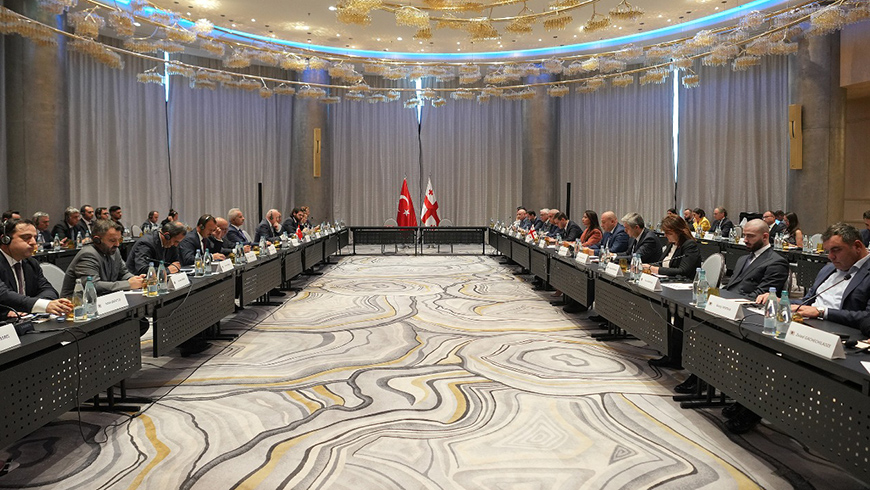
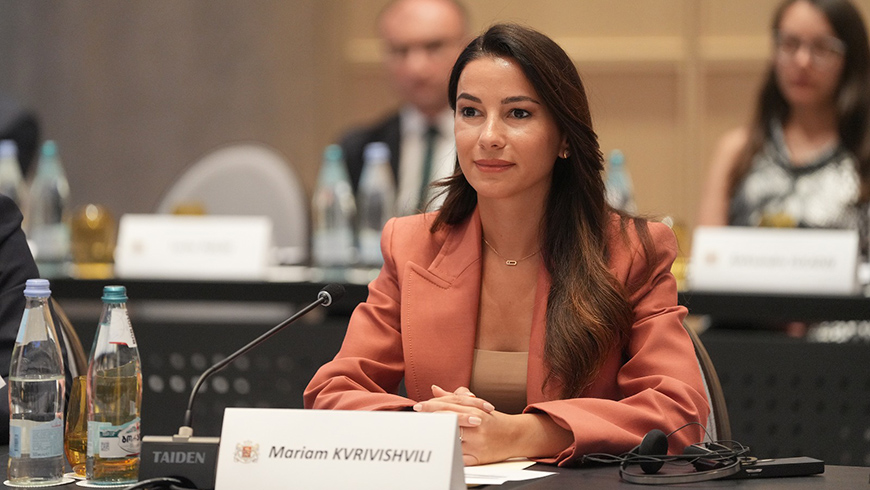
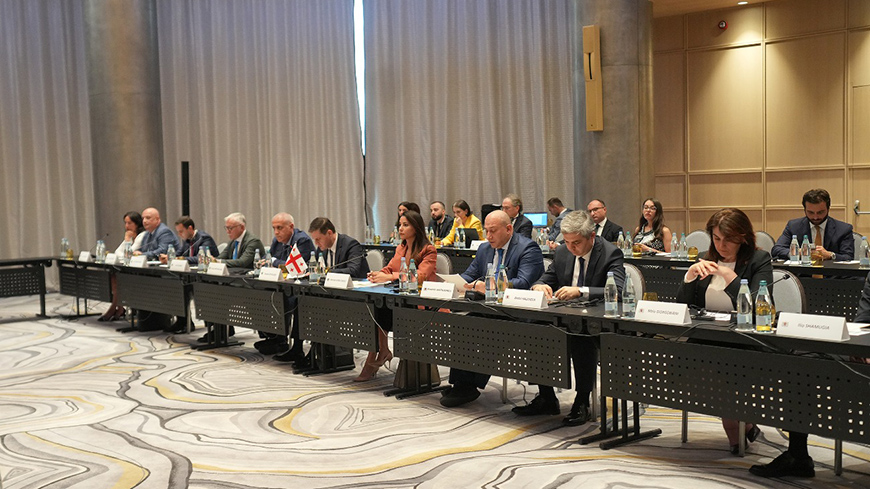
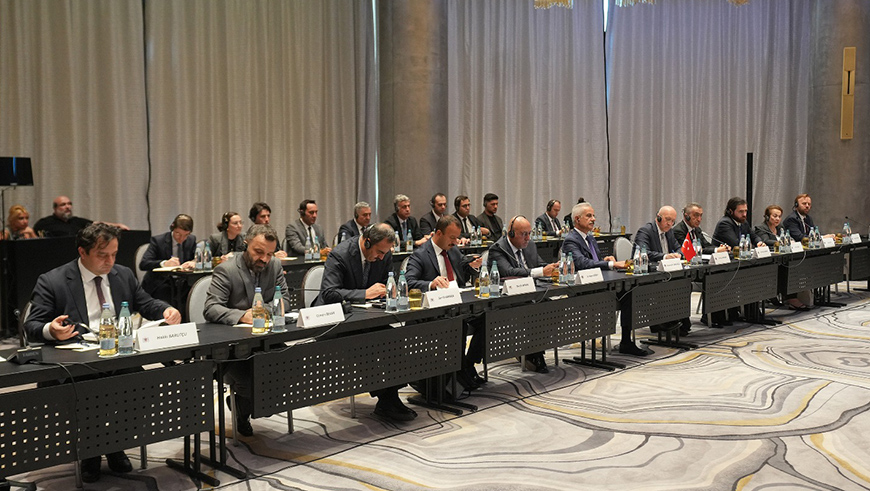
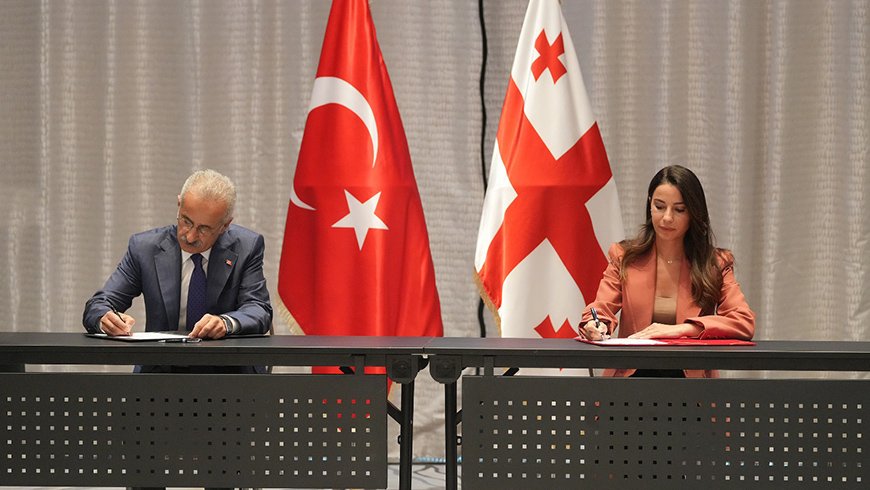
Minister of Economy and Sustainable Development, Mariam Kvrivishvili, opened the sixth session of the Georgia-Turkey Joint Intergovernmental Commission on Economic Cooperation. In her speech, the Minister discussed the prospects of deepening of trade and economic cooperation between the two countries and the importance of the intergovernmental commission format in this process. Mariam Kvrivishvili highlighted sectors and areas where there still is significant potential for economic partnership between Georgia and Turkey.
“Over the years, our countries have developed strong and dynamic economic relations. We are ready to play an even more active role in the process of their deepening and development. For years, Turkey has been Georgia’s number one trading partner and a significant investor, which clearly confirms the strong economic ties and growing dynamic of cooperation between the two countries,” – Mariam Kvrivishvili said.
In her speech, the Minister of Economy and Sustainable Development thanked the Turkish side for its firm support of Georgia’s sovereignty and territorial integrity.
The Turkish delegation is participating in the sixth session of the intergovernmental commission, led by Turkey’s Minister of Transport and Infrastructure, Abdulkadir Uraloğlu. Mariam Kvrivishvili highlighted that the commission is an effective format not only for strengthening economic ties between the countries but also for encompassing a wide range of cooperation.
Kvrivishvili also spoke extensively about important areas of economic cooperation between Georgia and Turkey, such as investments, energy, digital technologies, trade, transport, communications, and more.
In her speech, Mariam Kvrivishvili emphasized the strategic role of Georgia and Turkey in forming the Middle Corridor as a reliable, sustainable, and competitive transport route. The Minister drew attention to important regional strategic projects such as the Baku-Tbilisi-Kars railway, which will help increase freight turnover and attract additional cargo to the Middle Corridor. She also stressed the importance of coordinated joint work among the Middle Corridor countries to further develop and increase its competitiveness. Mariam Kvrivishvili focused on the development of transport and logistics infrastructure and named the projects Georgia is implementing in this direction, including the East-West Expressway, the Anaklia deep-sea port, the modernization of Georgian Railways, the new Tbilisi International Airport, and the Black Sea underwater power cable.
“To improve the country’s competitiveness and regional connections, strategic infrastructure projects are being implemented. We are confident that their development will become a source of additional economic attraction for both Georgia and the entire region. In this regard, active cooperation with a partner like Turkey is crucial,” – the Minister of Economy and Sustainable Development said.
Mariam Kvrivishvili also highlighted the growing air traffic between Georgia and Turkey, which contributes to the development of tourism and the deepening of business ties between the two countries. She noted that the increased frequency of flights, which now exceeds 100 flights a week, indicates the growing demand. “A few days ago, we discussed the prospects of opening a new air route between our countries with the management of Turkey’s leading airline, Turkish Airlines, which will significantly contribute to the expansion of connections and the development of tourism,” – Mariam Kvrivishvili noted.
The Minister of Economy and Sustainable Development introduced the members of the Turkish delegation to Georgia’s recent economic progress. As Kvrivishvili noted, in 2024, economic growth reached 9,4% – a rate that places Georgia third in the world. Mariam Kvrivishvili also emphasized that 2025 started with similarly high economic activity, with preliminary data for January-May showing average economic growth of 8,8%.
During the session, the parties underscored the importance of the Free Trade Agreement in strengthening economic ties between the two countries. It was noted that since the Agreement’s activation in 2008, trade turnover has increased annually, reaching up to 3,2 billion USD by the end of 2024. It was also highlighted that Turkey is one of Georgia’s largest investors.
The Georgia-Turkey Joint Intergovernmental Commission on Economic Cooperation also discussed issues of bilateral cooperation in such sectors as agriculture, culture, education, healthcare, etc.
At the end of the session, the Ministers signed the minutes of the Georgia-Turkey Joint Intergovernmental Commission on Economic Cooperation.


- SERVICES
- Inventory of Licenses and Permits
- Tourism
- Communication, Information and Modern Technologies
- National Quality Infrastructure
- ECONOMIC POLICY
- SME Development Strategy of Georgia
- Foreign Trade
- Energy
- Transport
- Communications, Information and Modern Technologies
1403
2 99 11 11
2 99 11 61
2 99 11 70